

Key Takeaways
- 1
The research question drives the design of the study
- 2
RCTs are best for causality; observational studies are more practical and common
- 3
Qualitative data gives additional depth and context to the ‘why’ of the study
- 4
The right study design strengthens credibility of findings
- 5
Common mistakes include wrongly implied causation, underpowered RCTs, ignoring confounders, and selecting design based on convenience
Pearl Information
What are the different study designs?
Qualitative (non-numerical data)
Qualitative studies are used to explore meaning, perception and behaviour. These types of studies use words, narratives and themes to explore a topic which cannot be captured by numbers alone. Qualitative studies can often be used to assess patient or stakeholder voices and answer the ‘how’ and ‘why’ questions regarding their experiences, surgical culture, and complex human behaviours. While quantitative data measures outcomes (like survival rates), qualitative research captures nuanced emotions, subjective pain, and systemic barriers, providing a deeper understanding of the surgical process.
Pearl → Quantitative research tells you whether something works. Qualitative research tells you why it works, or why it doesn’t.
Quantitative (numerical data)
Quantitative studies are used in surgery to provide objective, measurable data. They are essential for establishing evidence-based practices by statistically comparing treatment effectiveness, tracking complication and mortality rates, and evaluating surgical techniques. Different types of quantitative studies include:
- Cross-sectional studies: measures both exposure and outcome at a single point in time, but with no follow-up
- Case-control studies: begins with a shared outcome and retrospectively tracks exposure; these are more efficient for rarer diseases or outcomes
- Cohort studies: can prospectively or retrospectively begin with a shared exposure, and track outcome from there
- Randomised controlled trials (RCTs): the gold standard for causal inference, as these establish temporal precedence, covariation and control of alternative explanations
- Systematic reviews/meta-analyses: structured literature synthesis with statistical pooling of results
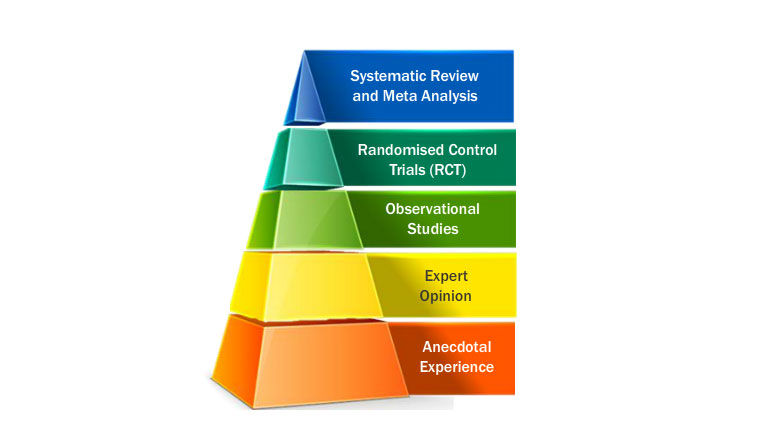
Why Study Design Matters
Each study design has its own strengths and weaknesses:
- Cohort studies are prone to confounding variables and loss to follow-up
- Case-control studies are vulnerable to recall bias and selection bias
- Cross-sectional studies risk reverse causation
A case study of this: Hormone Replacement Therapy (HRT) and Cardiovascular Protection
- In the 1980s-90s, large observational cohort studies suggested women on HRT appeared to have lower rates of heart disease
- However, the Women’s Health Initiative (WHI) RCT in 2002 showed that HRT increased risk of stroke, thromboembolism, and coronary events in certain groups
- This is because, even with statistical adjustment, residual confounding remained in earlier cohort studies where women who chose HRT were wealthier, more likely to exercise and more likely to access preventative care
Pearl → A poorly matched design can invalidate an otherwise well-executed study.
